Integrating Digital Settlement Mechanisms with Event-Based Billing in Live Entertainment Sectors
Eden Griffin · Aug 19, 2026
Integrating Digital Settlement Mechanisms with Event-Based Billing in Live Entertainment Sectors
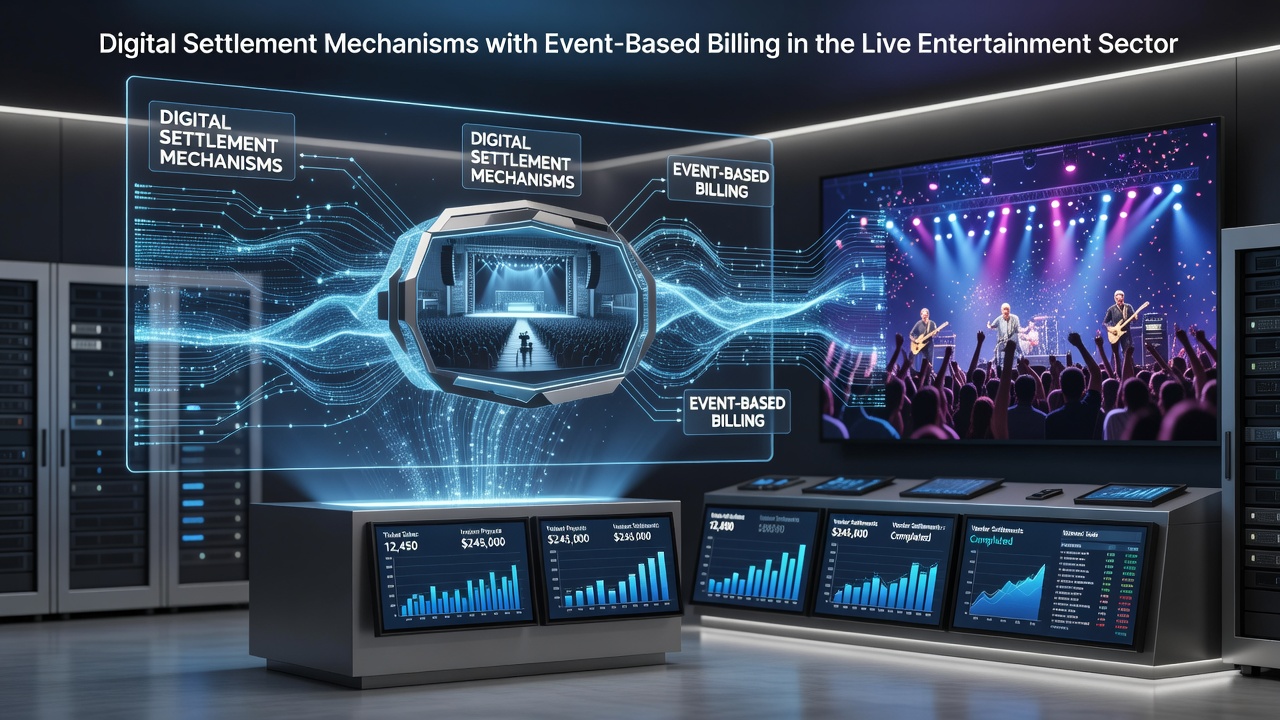
Live entertainment sectors have adopted digital settlement mechanisms that pair directly with event-based billing structures, allowing venues and promoters to process payments tied to specific occurrences such as ticket scans, merchandise purchases, or service activations during festivals, sports matches, and concerts. These systems replace traditional batch processing with real-time or near-real-time transfers that align costs and revenues to individual events rather than fixed cycles.
Core Components of Digital Settlement in Event Contexts
Digital settlement mechanisms rely on APIs that connect point-of-sale terminals, mobile wallets, and backend ledgers to execute fund movements once an event trigger occurs. In live settings, triggers include entry gate validations, concession stand transactions, or streaming access activations. Event-based billing then calculates charges per instance, such as per-attendee fees or per-performance royalties, instead of recurring monthly invoices.
Observers note that integration occurs through standardized protocols where billing engines receive confirmation signals from settlement rails, updating accounts immediately after each trigger. This approach reduces reconciliation delays that previously stretched across days or weeks in high-volume environments like stadiums hosting multiple shows per month.
Implementation Patterns Across Venues
Venues in major markets have integrated these tools by layering settlement APIs onto existing ticketing platforms. For instance, when a fan purchases a ticket and later redeems it at the gate, the system settles the promoter's share while simultaneously recording any variable fees tied to that attendee's profile. Data from industry reports indicates that such pairings handle thousands of micro-transactions per event without manual intervention.
One study revealed that European venues using combined systems saw settlement times drop from 48 hours to under four hours for event-specific payouts. Similar patterns appear in North American festivals where organizers link digital wallets to per-day billing for vendors operating temporary stalls.
Technical Synchronization Requirements
Successful integration demands compatible data schemas between settlement providers and billing software so that each event marker carries metadata for both payment routing and charge calculation. Middleware solutions often manage this handoff, converting raw transaction data into billable items while preserving audit trails required by financial regulators.
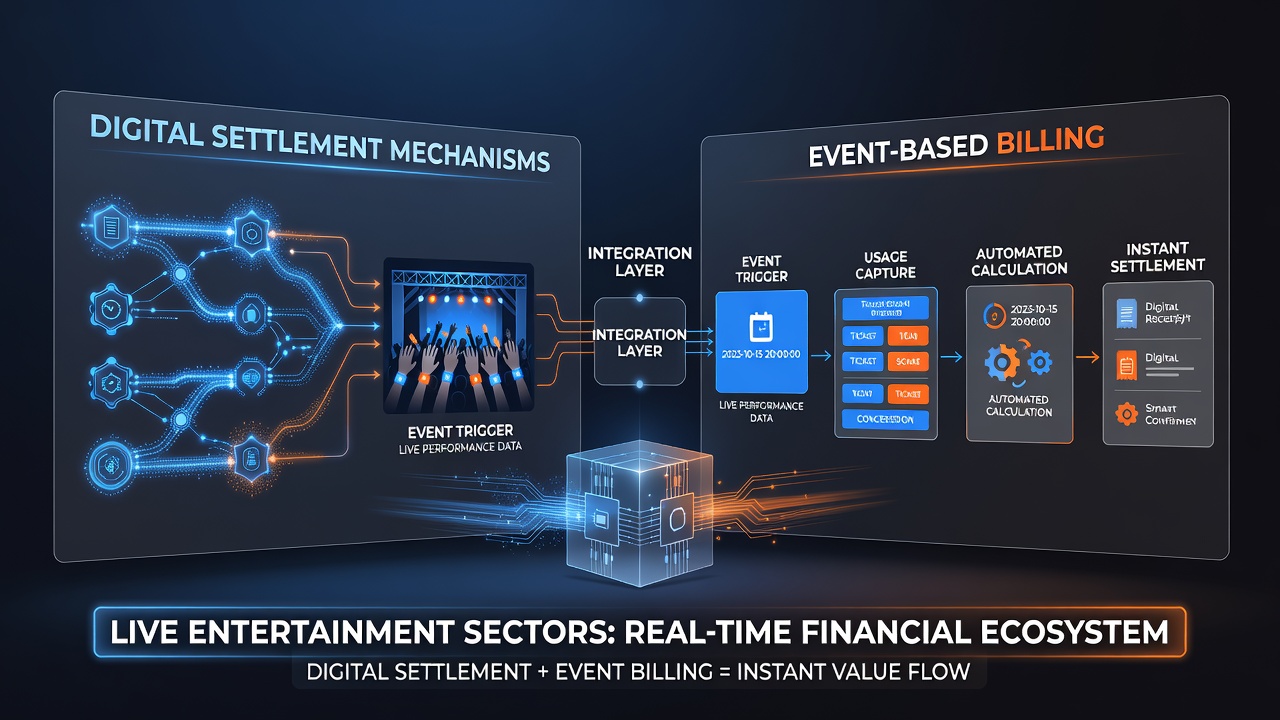
Researchers have documented cases where mismatched timestamps between entry systems and payment rails caused temporary discrepancies, prompting developers to embed timestamp synchronization protocols. These adjustments ensure that an attendee's entry at 8:15 p.m. aligns precisely with the settlement instruction sent at 8:16 p.m.
Regulatory and Compliance Considerations
Authorities in different regions have issued guidelines that affect how these integrated systems operate. The European Central Bank framework on instant payments requires settlement finality within seconds for consumer-facing events, while Canadian payment system oversight emphasizes consumer protection layers around variable event billing disclosures. Venues must therefore configure their platforms to generate compliance reports automatically after each major event.
Figures from 2025 industry surveys showed that organizations adopting these integrated models reduced compliance audit preparation time by roughly 30 percent compared with legacy separate systems. In August 2026, updates to cross-border settlement standards further encouraged entertainment operators to embed regulatory checks directly into their event-trigger workflows.
Operational Outcomes in Practice
Take one festival organizer who linked digital settlement rails to per-performance artist payouts. When gate counts confirmed attendance thresholds, the billing module automatically released funds to performers while settling vendor commissions on the same event cycle. This eliminated separate invoicing steps that once required finance teams to match paper records across multiple departments.
Another case involved a sports arena network that synchronized concession sales data with settlement APIs. Each hot dog or beverage purchase triggered both immediate vendor settlement and an event-based service fee calculation, allowing management to review daily event profitability without waiting for month-end closes.
Future Integration Pathways
Emerging device ecosystems such as wearable payment bands and venue-specific apps continue to feed additional event triggers into the same settlement and billing frameworks. Observers note that these expansions require ongoing protocol updates to maintain consistency across new hardware types while preserving the core event-to-settlement linkage.
Conclusion
Integration of digital settlement mechanisms with event-based billing has produced measurable reductions in processing times and reconciliation efforts across live entertainment operations. Data from multiple regions shows that venues achieve faster fund movements and clearer per-event financial visibility when the two systems operate from shared triggers rather than independent schedules. As device connectivity expands, the same principles support continued scaling without proportional increases in administrative overhead.