29 May 2026
Mapping API Synchronization Challenges in Adaptive Billing Networks for Emerging Service Providers
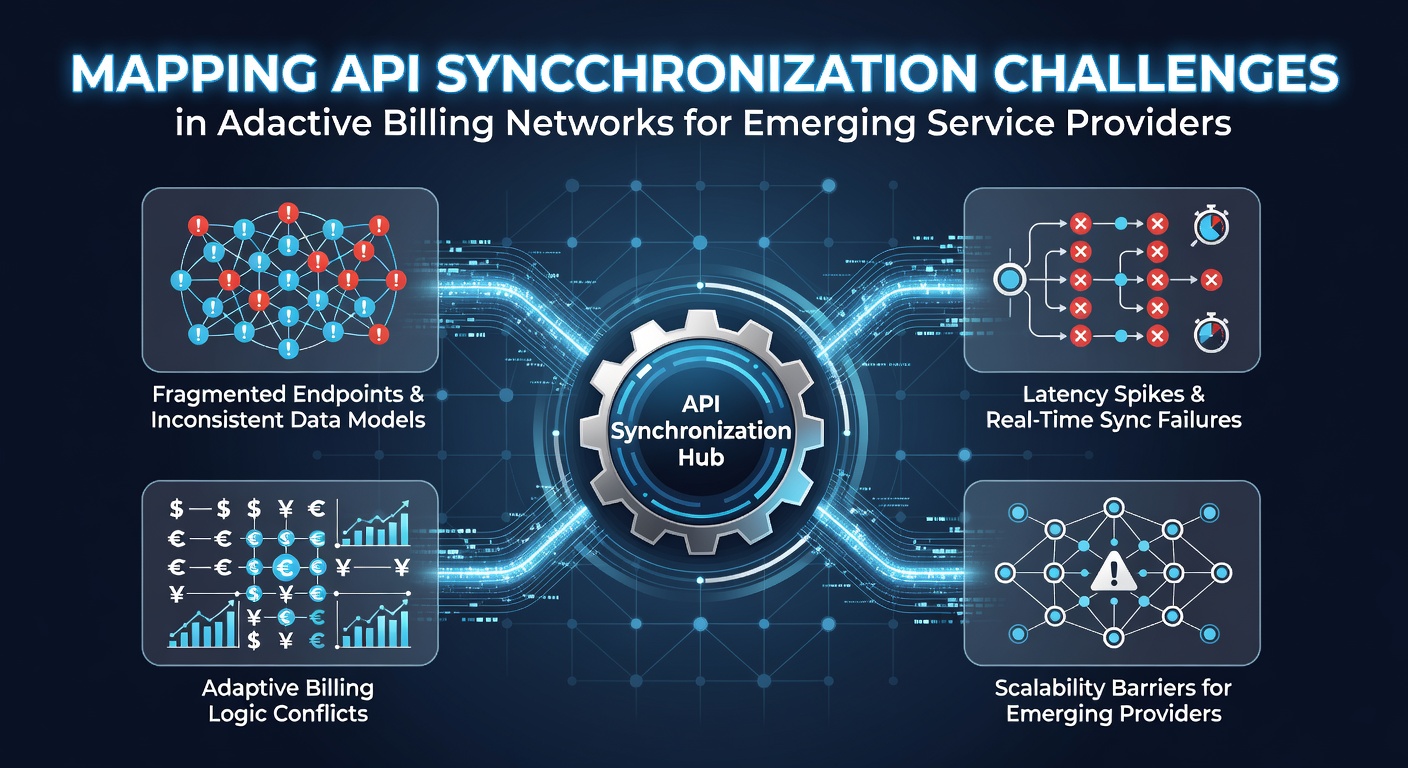 Emerging service providers encounter distinct technical obstacles when they attempt to maintain consistent data across distributed billing platforms that rely on multiple APIs, and these issues often surface during periods of rapid network expansion. Adaptive billing networks adjust charges based on usage patterns, subscription tiers, and real-time events, which requires precise coordination between front-end applications, backend ledgers, and third-party gateways. Synchronization failures can produce mismatched invoices, delayed revenue recognition, or compliance gaps that regulators examine closely. Observers note that latency variations between regional data centers create one primary friction point, especially when providers operate across time zones with fluctuating traffic loads. Studies from academic institutions indicate that even millisecond-level delays in API handshakes can cascade into broader inconsistencies when billing engines update customer accounts concurrently. In May 2026 several mid-sized providers reported temporary revenue leakage after an unexpected surge in mobile transactions exposed gaps in their event-ordering mechanisms.
Core Technical Barriers in Data Consistency
API synchronization hinges on reliable state management, yet emerging providers frequently inherit legacy database schemas that were never designed for high-frequency updates. Researchers have documented cases where eventual consistency models break down under bursty workloads, leaving some ledgers reflecting payments that others have not yet acknowledged. This situation becomes acute when adaptive rules trigger mid-cycle price changes or prorated refunds.
Those who have examined production logs point to idempotency token collisions as another recurring problem, particularly when mobile applications retry failed calls without proper deduplication logic. Industry reports compiled by the Monetary Authority of Singapore highlight similar patterns among fintech startups that scaled internationally before hardening their retry protocols. The resulting duplicate charges trigger support tickets and erode customer trust even when the underlying amounts are later corrected.
Scalability Pressures on Emerging Networks
Service providers entering new markets must often integrate with local payment rails and tax calculation services whose response times differ significantly from their core systems. Data from the European Central Bank shows that cross-border API calls can experience jitter exceeding 300 milliseconds during peak trading hours, forcing billing engines to queue updates and risking desynchronization with downstream analytics tools. Adaptive networks attempt to mitigate this through caching layers, but cache invalidation strategies frequently lag behind actual state changes.
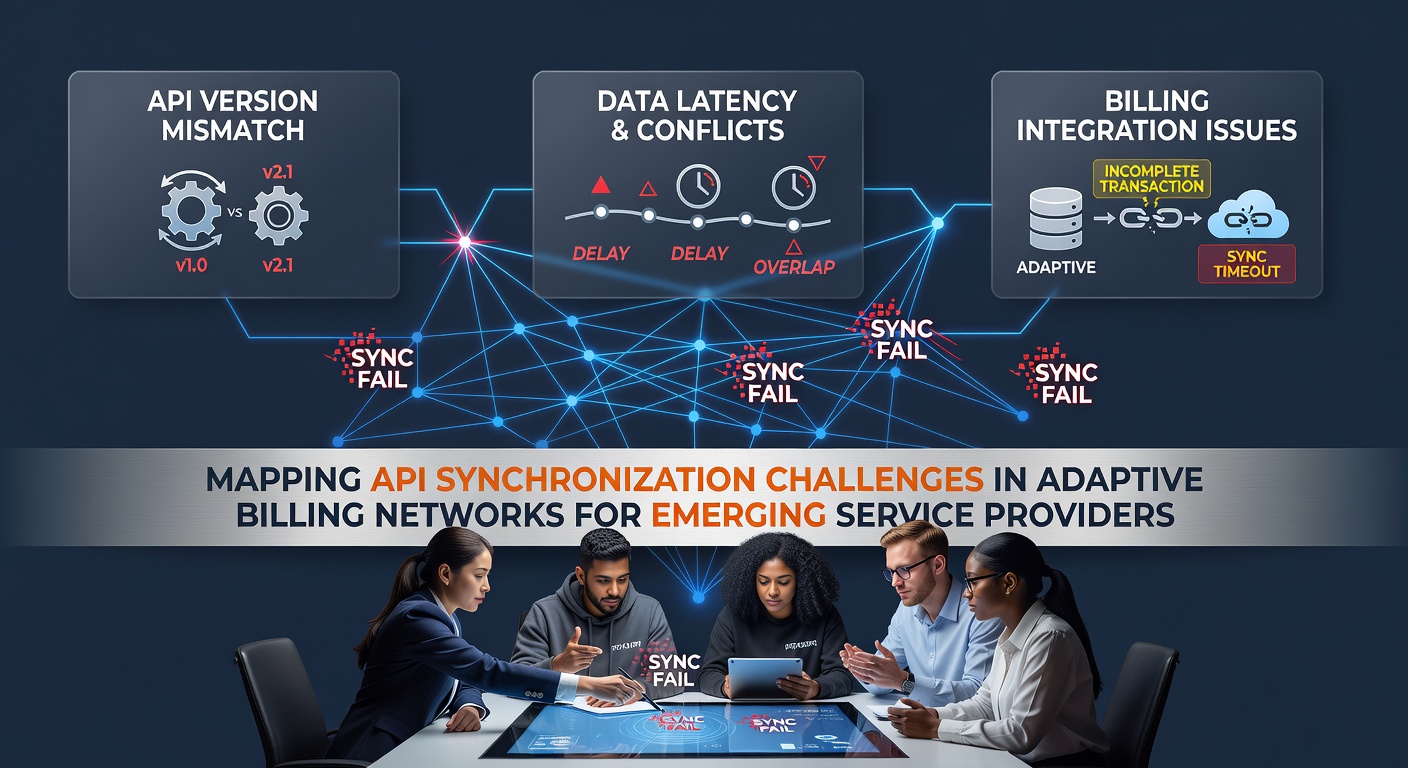
Capacity planning teams therefore monitor queue depths and backpressure signals more aggressively than in static billing setups. One study of Canadian digital service firms revealed that providers who implemented circuit breakers around external tax APIs reduced synchronization errors by roughly 40 percent compared with those relying solely on timeout thresholds.
Security and Compliance Overlaps
Encryption requirements add another dimension to synchronization challenges because each API endpoint may enforce distinct key rotation schedules and certificate pinning rules. When these schedules drift out of alignment, authentication failures interrupt the flow of billing events and force manual reconciliation. Regulatory frameworks in multiple jurisdictions now mandate audit trails that capture every synchronization attempt, increasing the storage and processing overhead for smaller operators.
Experts tracking these developments observe that providers who adopt standardized event schemas across all APIs experience fewer reconciliation disputes, although the initial mapping effort demands substantial engineering resources. The reality is that emerging players must balance rapid feature deployment against the need for robust conflict-resolution logic that can handle partial failures without human intervention.
Practical Approaches Observed in the Field
Teams addressing these issues often deploy distributed tracing frameworks that tag each billing event with a unique correlation identifier, allowing operators to reconstruct the exact sequence of API calls when discrepancies appear. Some organizations have begun experimenting with conflict-free replicated data types to manage concurrent updates to subscription balances, reducing the window during which two systems can hold divergent views of the same account.
Training programs for engineering staff now routinely include modules on distributed systems theory tailored to billing workloads, reflecting the recognition that API synchronization is no longer a peripheral concern. Figures released by trade associations indicate steady growth in the number of providers investing in dedicated synchronization monitoring dashboards that surface anomalies before they affect end-customer invoices.
Conclusion
Mapping API synchronization challenges within adaptive billing networks continues to evolve as service providers expand their geographic footprints and introduce more granular pricing models. Technical patterns identified through operational data and regulatory filings provide concrete reference points for teams building next-generation platforms. Continued attention to event ordering, idempotency, and cross-system monitoring remains central to maintaining accurate billing outcomes across increasingly complex infrastructures.